

-

Which engine oil additive reduces friction?
First, we need to understand the role of engine oil additives. Engine oil additives are mainly composed of lubricants, anti-wear agents, detergents and anti-rust agents. Among them, the main function of lubricants and anti-wear agents is to reduce friction and reduce wear of engine parts. Therefore, we focus mainly on these two additives. For lubricants, Read more
-

Corrosion Inhibitor Lubricants and Additives: What You Need to Know
Corrosion inhibitor lubricants and additives can be valuable tools for protecting metal surfaces from rust and wear in various applications. However, it’s essential to understand their strengths, limitations, and proper use to avoid potential harm. Here’s a breakdown: Types of Corrosion Inhibitors: Applications: Considerations: Alternatives: Remember: If you have further questions about specific applications, types Read more
-

What are lubricant additives?
Lubricant additives are chemical compounds or substances that are mixed into lubricating oils and greases to enhance their performance and extend their service life. These additives are used to improve the overall properties of lubricants and to address specific challenges that arise during the operation of machinery and engines. Lubricant additives work in various ways,… Read more
-
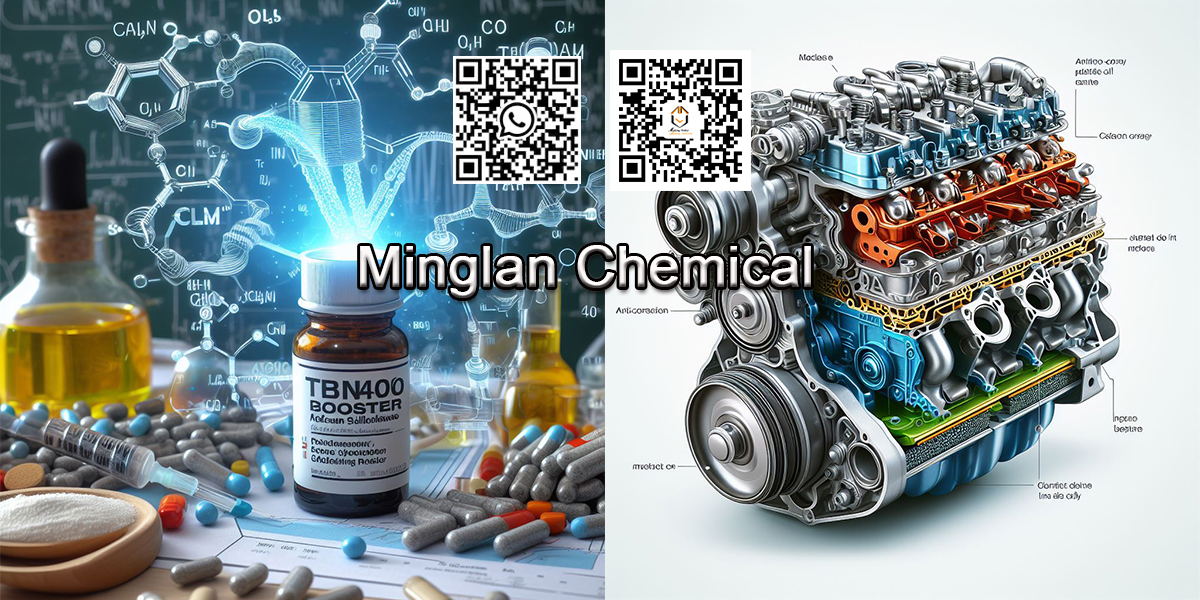
Why choose TBN 400?
There are several reasons to choose TBN (Total Base Number) 400 as an engine oil additive: When selecting TBN 400 as an engine oil additive, it is important to consider the specific requirements of the engine and application. It is recommended to consult a lubricant engineer or follow the manufacturer’s recommendations to ensure optimal performance Read more
-
What is TBN400 Calcium Sulfonate for grease?
TBN400 Calcium Sulfonate is a type of grease thickener and additive that is commonly used in high-performance lubricating greases. TBN stands for Total Base Number, which indicates the alkaline reserve of the grease to neutralize acids formed during operation and to protect metal surfaces from corrosion. A TBN of 400 indicates a high alkaline reserve, Read more
-
The role of Sulfurized Isobutylene-high pressure
Sulfurized isobutylene(SIB), when used at high pressures, can play various roles in different industrial and chemical processes. Here are a few potential roles and applications: 1. Extreme Pressure (EP) Lubricant Additive: Sulfurized isobutylene(SIB), often in the form of sulfurized isobutylene succinimide, is commonly used as an EP lubricant additive. When added to lubricating oils, it Read more
-

One of the best antioxidant lubricant additives——2.6-di-Tertiary Butyl Para-Cresol !
What is 2.6-di-Tertiary Butyl Para-Cresol: 2.6-di-Tertiary Butyl Para-Cresol (DBPC) is a chemical compound commonly used as an antioxidant and stabilizer in various applications, including lubricants and fuels. It is often added to these products to prevent or slow down the degradation of the base oil or fuel, which can occur due to oxidation and the Read more
-
What is the role of Amine Type Antioxidants in lubricating oils?
What is Amine Type Antioxidants? Amine Type Antioxidants are chemical additives added to lubricating oils (mainly used in internal combustion engines) to prevent oil degradation and the formation of harmful by-products. They play an important role in preventing oil oxidation and the formation of degradation products. Oxidation is an unwanted chemical process that occurs when Read more
-
What is low molecular weight polyisobutene?
Low Molecular Weight Polyisobutene (LMW PIB) is a synthetic hydrocarbon polymer made by the polymerization of isobutylene (C₄H₈), with a low molecular weight range, typically between 300 and 2,000 g/mol. It is also referred to as polyisobutylene oligomer or polybutene in some contexts. 🧪 Chemical Structure: ⚙️ Key Properties: Property Description Appearance Clear, viscous, colorless Read more