

-

Frother for Froth Flotation: Choosing Between MIBC, Pine Oil and Glycol Frothers
How to choose a frother for froth flotation: what frothers do at the bubble surface, how MIBC, pine oil and glycol frothers differ in frothing power and selectivity, and how to control dosage in the circuit. Read more
-
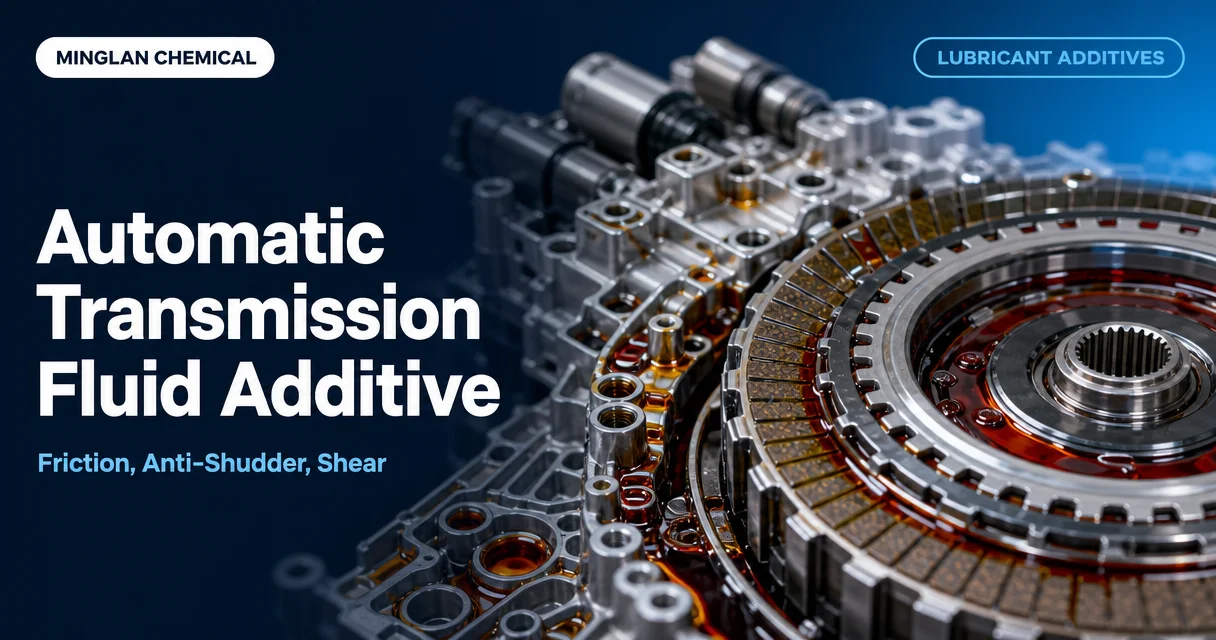
Automatic Transmission Fluid Additive: Friction Durability, Anti-Shudder and Shear Stability
What an automatic transmission fluid additive package has to deliver: friction durability and anti-shudder behaviour, friction modifier chemistry, shear stability, oxidation control and what to ask a supplier. Read more
-

Froth Flotation Reagents for Copper Ore: A Practical Reagent Scheme
A practical reagent scheme for copper sulfide ores: collector selection and split dosing, frother choice and froth control, lime and activator set points, and indicative additions by stage. Read more
-
Lead Zinc Ore Flotation Reagents: Regimes for Sequential and Bulk Flotation
How lead zinc ore flotation reagents are selected: sequential versus bulk regimes, collectors for galena and sphalerite, activators, depressants, pH control and dosing points. Read more
-

CI-4 Diesel Engine Oil Additive Package: Soot Control, TBN Retention and EGR Compatibility
CI-4 diesel engine oil additive package guide: why the category still matters, the five duties it must deliver, component roles, and how to specify and source the package. Read more
-

Sodium Isopropyl Xanthate (SIPX): A Balanced Collector for Copper and Zinc Sulfide Ores
Sodium isopropyl xanthate (SIPX) balances collecting power and selectivity: specifications, behaviour in copper and lead-zinc circuits, and how it compares with SBX, SEX and PAX. Read more
-
Sodium Sulphide in Flotation: Sulphidisation, Depression and De-Sorption
Sodium sulphide in flotation: how one reagent sulphidises oxide ores, depresses copper minerals in molybdenum cleaning, and strips collector before selective separation. Read more
-
Gold Ore Flotation Chemicals: PAX, Dithiophosphate and Sulphide Recovery
Gold ore flotation chemicals guide: why gold circuits use PAX and dithiophosphate blends, how frothers and modifiers are selected, and what to verify when buying reagents. Read more
-
Zinc Sulfate Flotation Depressant: Selective Depression in Lead-Zinc Separation
Zinc sulfate flotation depressant guide: how ZnSO4 hydrolysis products hold sphalerite back, how to pair it with cyanide or sulphite, and the specification points that matter. Read more