

-

The role of demulsifiers in oil: key insights and future prospects
In industries such as petroleum, chemicals, food and pharmaceuticals, quality control of oil products is crucial. However, the existence of emulsified oil has brought serious troubles to these industries. As an effective solution, demulsifiers play an important role in the oil treatment process. This article will take an in-depth look at the role of demulsifiers… Read more
-

Deciding how to formulate a cutting oil emulsion?
In machining, the main functions of cutting oil are cooling, lubrication and cleaning. However, there are some problems during the use of traditional cutting oil, such as oil contamination, insufficient lubrication, etc. These problems may lead to equipment failure, tool wear and other problems. In order to solve these problems, we can formulate the cutting… Read more
-

What is the difference between establishing an emulsion and breaking it?
Emulsions and demulsifiers are two common chemical liquids that are fundamentally different. An emulsion is a mixture that contains ingredients such as water, oil, and surfactants that are thoroughly mixed to form a stable emulsion. The demulsifier is a liquid specially used to break the emulsion. It can break the oil-water interface of the emulsion… Read more
-

Determine what the lubricant is composed of?
Lubricant is an important material that reduces friction and wear between mechanical parts. Their ingredients and composition vary depending on the application scenario and needs. Common lubricant ingredients include: Petroleum: Petroleum is one of the main components of lubricants. It has extremely high viscosity and fluidity and can provide good lubrication effects. Additives: Additives can… Read more
-

Determine what the lubricant oil is composed of?
Lubricating oil is a lubricant widely used in various machinery and equipment. Its main functions are to reduce friction, prevent wear, control temperature, etc. This article will introduce in detail the composition of lubricating oil and its functions. The main components of lubricating oil include base oil and additives. Base oil is the main component… Read more
-

Tricresyl Phosphate: A Highly Effective Extreme Pressure Anti-Wear Oil Additive
Among various industrial lubricants, extreme pressure anti-wear oil is a widely used lubricant that can effectively reduce friction and wear and improve mechanical efficiency and service life. Tricresyl phosphate (TMP) is a widely used extreme pressure anti-wear oil additive. Tricresyl phosphate, with the chemical formula C21H21O4P, is a white or slightly yellow crystal with the… Read more
-

Study on the dispersion of polyisobutylene succinimide oil additives in lubricating oils
Polyisobutylene succinimide (PIBSO) is a special additive used in lubricating oils. Its excellent viscosity characteristics and friction improving properties make it occupy an important position in the lubricating oil market. However, the dispersion of PIBSO has an important impact on its performance in lubricating oils. This article will take an in-depth look at the dispersion… Read more
-
What is the difference between CF-4 and CH-4 engine oil?
CF-4 and CH-4 engine oil are two different types of engine oil. They have significant differences mainly in emission standards, use scope, grade and price. Scope of use: CF-4 is suitable for high-speed, four-stroke, naturally aspirated or turbocharged diesel engines. CH-4 is used in high-speed, four-stroke, diesel engines and is required to comply with the… Read more
-
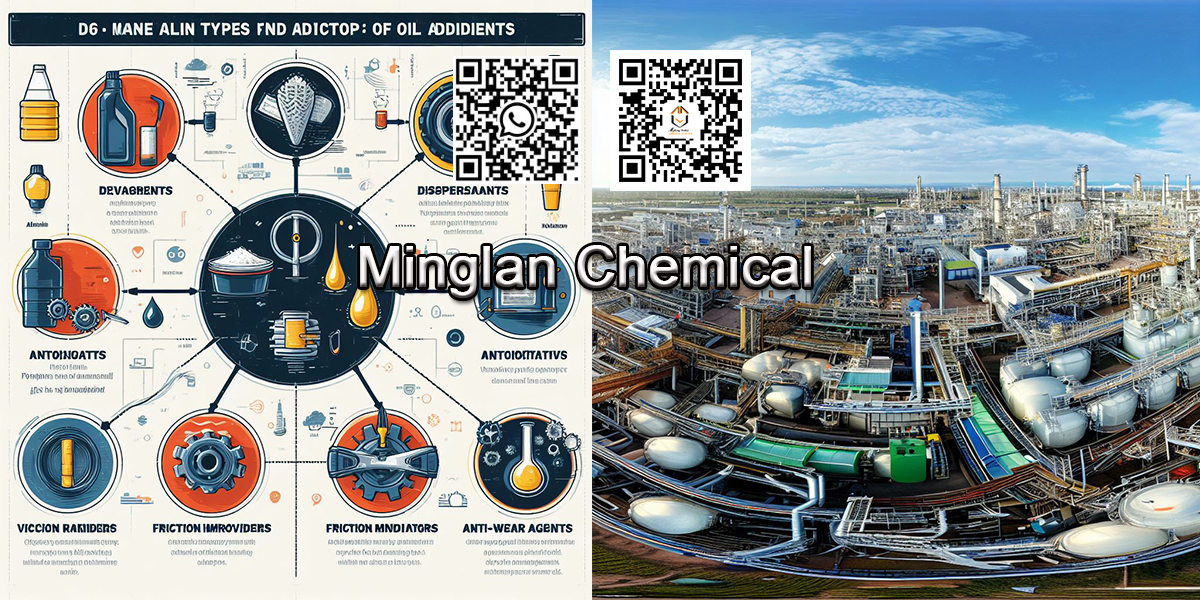
What are the 6 different oil additives?
Common engine oil additives include detergents, dispersants, antioxidants, anti-rust additives, anti-corrosion additives, viscosity index improvers, pour point inhibitors, anti-wear additives, defoaming agents, colorants, alkaline additives, and extreme pressure additives , emulsifiers, moderate extreme pressure additives and complete extreme pressure additives. The functions of various additives are as follows: Detergent Additives: These additives help keep your… Read more