

-

Demulsifiers in Lubricating Oils: Function and Principle
In the field of lubricating oil, demulsifier is an important additive, its function is to prevent emulsification in lubricating oil. A demulsifier is an additive that breaks up oil-water emulsions. In lubricating oil, demulsifiers use a certain principle of action to decompose the oil-water emulsion into two phases, namely the oil phase and the water… Read more
-
What is the CK-4/E11 diesel engine oil compound additive to choose?
Choosing CK-4/E11 diesel engine oil compound additive is of great significance for engine lubrication and maintenance. CK-4/E11 diesel engine oil composite additive is a lubricating additive specially developed for diesel engines. It has multiple functions such as reducing friction, reducing wear, enhancing antioxidant properties, and improving fuel economy. First, let’s understand the definition and characteristics… Read more
-

What are Pour Point Depressants Polymers?
Pour point depressing polymer is a special material that can reduce the pour point of oil and is widely used in industry and daily life. So, what exactly are pour point depression polymers? Pour point depressing polymer is a polymer material that has the property of lowering the pour point of oil. Pour point refers… Read more
-

Choose What is TBN 400?
TBN 400 stands for total base number 400, a term used to measure the alkalinity of engine oils. TBN represents the oil’s ability to neutralize acidic compounds formed during combustion and prevent them from causing damage to engine components. TBN is an important property of engine oils, especially for high-performance and heavy-duty engines. As engine… Read more
-

What can thicken oil?
A variety of substances can be used to thicken oil, depending on the specific application. Some common thickeners include: It is important to note that thickener selection depends on factors such as the desired viscosity, compatibility with other additives, and the specific application of the oil. Read more
-

Protective additives in lubricants: key ingredients and functions
This article will take an in-depth look at protective additives in lubricants, including their types, functions and methods of addition, while emphasizing the importance of correct use. By understanding this, we will better understand how these key components in lubricants provide efficient protection for our machinery and equipment. Basic concepts of lubricants and protective additives… Read more
-

What agent can increase viscosity?
First, let’s understand what viscosity is. Viscosity is a measure of the internal friction of a fluid, indicating the resistance it experiences when flowing. High viscosity fluids flow less easily and require higher force to make them flow. Increasing viscosity in lubricants or engine oils is a common need. Viscosity is a parameter of the… Read more
-
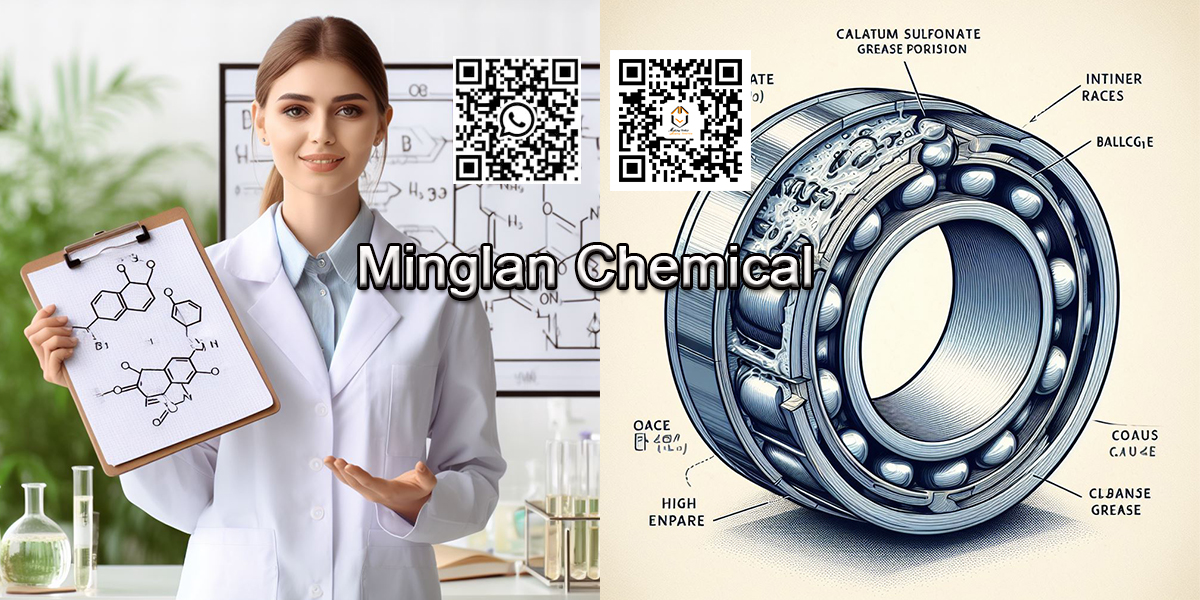
What is the purpose of choosing calcium sulfonate grease?
Calcium sulfonate greases are selected to provide superior lubrication and protection in demanding industrial applications. Here are some reasons to choose calcium sulfonate grease: It is important to note that calcium sulfonate grease may not be suitable for all applications. Grease selection should be based on the specific requirements and conditions of the application. It… Read more
-

Is choosing a diesel engine oil additive the same as a gasoline engine oil additive?
In today’s motor vehicle market, diesel vehicles and gasoline vehicles are the two most common types. Accordingly, diesel engine oil and gasoline engine oil are also widely used. However, for these two oils, are their additive selections the same? Generally speaking, choosing a diesel engine oil additive is different from choosing a gasoline engine oil… Read more