-
What is the purpose of choosing diphenylamine?
Diphenylamine has been chosen for a variety of uses, primarily due to its chemical properties and applications. Some common purposes include: 1) Use as antioxidant: Diphenylamine is often used as an antioxidant in the rubber industry. It helps prevent rubber degradation by inhibiting the formation of harmful oxidation products. 2) Used as an indicator: Diphenylamine… Read more
-
What are Lubricating oil Antioxidant Additives?
Lubricating oil antioxidant additive is an important lubricating oil additive, mainly used to reduce the oxidation rate of lubricating oil, increase the service life of lubricating oil, and ensure the normal operation of the engine. Definition and functions of lubricating oil antioxidant additives Lubricating oil antioxidant additives are compounds added to lubricating oils and greases… Read more
-
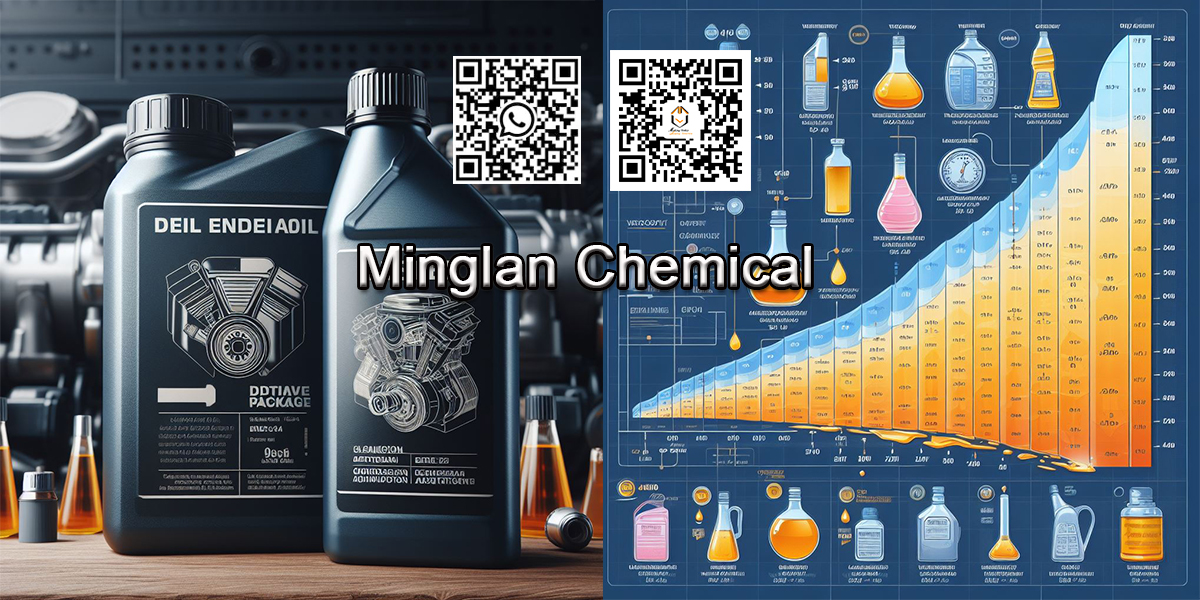
Select What is the 10W-30 Viscosity Index?
The viscosity index (VI) of 10W-30 motor oil typically ranges from 130 to 160, depending on the base oil quality and additive content. 🔍 What is Viscosity Index (VI)? 📊 Typical Viscosity Index for 10W-30 Oils Base Oil Type Typical VI Group I Mineral Oil ~130 Group II Mineral Oil 130–140 Group III (Hydrocracked) 140–150… Read more
-
Enhancing Product Performance with Dispersant Additive
A dispersant additive is a type of chemical additive used in lubricants and fuels to improve the dispersibility and solubility of contaminants and solid particles. Dispersants are particularly important in lubricants, where they play a crucial role in maintaining engine cleanliness and preventing the formation of harmful deposits and sludge. Read more
-
What is the composition of pour point depressant(PPD)?
Pour point depressants (PPDs) are additives used in lubricants and fuels to lower the pour point, which is the temperature at which the fluid becomes too thick to flow freely. By reducing the pour point, these additives help maintain fluidity and pumpability at lower temperatures, especially in cold climates. The specific composition of pour point… Read more
-

How do you make sodium petroleum sulfonate?
Sodium petroleum sulfonate, also known as petroleum sulfonate or petroleum sodium sulfonate, is a widely used surfactant in the petroleum industry, particularly in oilfield applications. It is produced through a sulfonation process, which involves reacting petroleum-based feedstock with sulfuric acid to form the sulfonic acid, followed by neutralization with sodium hydroxide to produce the sodium… Read more
-
Is there an additive to make oil thicker?
Yes, there are oil additives specifically designed to make oil thicker or increase its viscosity. These additives are known as viscosity index improvers (VII) or viscosity modifiers. They are used to improve the oil’s viscosity-temperature relationship, making it more resistant to thinning at higher temperatures and preventing excessive thickening at lower temperatures. Read more