
-
What is the market for metalworking fluid additives?

The market for metalworking fluid additives is driven by the growing demand from various industries, including automotive, aerospace, machinery, and construction. Metalworking fluids (MWFs) are essential in these industries to improve the efficiency, quality, and lifespan of metalworking processes such as cutting, drilling, milling, and grinding. The metalworking fluid additive market mainly includes cutting fluid…
-
What is the role of additives in metalworking fluids?

Introduction to Metalworking Fluids Metalworking fluids are essential in various machining processes, playing a critical role in cooling, lubrication, and chip removal. Additives are crucial components of these fluids, enhancing their performance and extending their life. Key Functions of Metalworking Fluid Additives Additives in metalworking fluids serve several key functions: Types of Additives in Metalworking…
-
5A Spherical Molecular Sieve Adsorbent

5A Spherical Molecular Sieve Adsorbent is used in the MOLEX dewaxing process to produce liquid wax products, and can also be used in variable pressure adsorption, etc. The MOLEX process separates n-paraffins (C9-C17) from kerosene fractions, and n-paraffins (n-paraffins) are mainly used in the production of Linear Alkyl Benzene (LAB). And most of Linear Alkyl…
-
C5/C6 Ortho-isomer Separation Specialized Adsorbents

C5/C6 ortho-isomer separation is a specialized process used in the petrochemical industry to separate and purify ortho-isomers of C5 and C6 hydrocarbons, such as xylenes and ethylbenzene. These ortho-isomers have similar physical and chemical properties, making their separation challenging and requiring advanced separation technologies, including adsorption processes. Specialized adsorbents play a crucial role in achieving…
-
how to pick extreme pressure additives?

Choosing the right extreme pressure (EP) additive depends on the application, operating conditions, compatibility with base oils, and environmental or regulatory requirements. Here’s a step-by-step guide to help you pick the right EP additive: ✅ 1. Define the Application Different machinery and conditions require different types of EP additives: Application Common EP Additives Gear oils…
-
how to pick low temperature extreme pressure additives?

Here’s how to pick low temperature extreme pressure additives for lubricants: Understanding Low Temperature Performance: Choosing Low Temperature EP Additives: Performance Considerations: Additional Factors: Here are some additional tips: By carefully considering these factors, you can select the most appropriate low-temperature extreme pressure additives for your specific lubrication needs. Remember, consulting with a lubrication expert…
-
how sulfur is used as an extreme pressure additive?
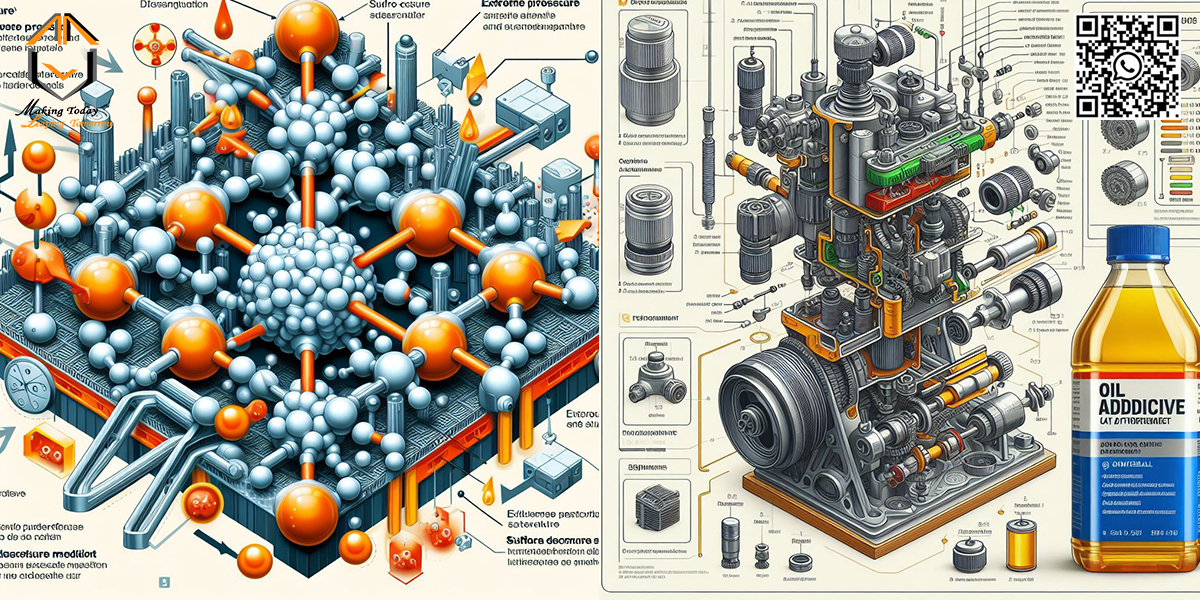
Sulfur is a classic extreme pressure (EP) additive used in lubricants to enhance their ability to withstand high pressure and prevent wear on metal surfaces. Here’s how it works: Chemical Reaction: Protective Film Benefits: Types of Sulfur-Containing EP Additives: There are various sulfur-containing EP additives used in lubricants: Limitations of Sulfur-Based EP Additives: Overall, sulfur…
-
how to apply extreme pressure additives?

Extreme pressure (EP) additives are commonly used in lubricants, especially in applications involving high loads, high temperatures, or metal-to-metal contact surfaces. These additives help prevent metal surfaces from welding together or undergoing excessive wear under extreme conditions. Here’s how you can apply extreme pressure additives effectively: By following these steps, you can effectively apply extreme…
-
a typical ‘extreme pressure additive’ is:

A typical extreme pressure (EP) additive used in industrial lubricants, including gear oils and greases, is sulfur-phosphorus compounds. These compounds work by forming a protective film on metal surfaces under high-pressure and high-temperature conditions, reducing friction and preventing metal-to-metal contact, which can lead to wear and failure. Sulfur-phosphorus EP additives typically contain organic sulfur compounds,…
-
viscosity grades and how they work

Viscosity grades are a way to classify the viscosity of lubricating oils, which is essentially a measure of the oil’s resistance to flow. The Society of Automotive Engineers (SAE) developed a standardized system for grading the viscosity of oils, particularly motor oils. This system is known as the SAE viscosity grade system. Here’s how it…