

A reliable flotation reagent manufacturer is the difference between a flotation circuit that runs at design recovery and one that spends every season chasing quality problems. Xanthate collectors, frothers, and regulators are consumed continuously, their performance depends on batch-to-batch consistency, and each ore type responds to slightly different chemistry. Concentrators that source from a single competent manufacturer consolidate specifications, testing, and logistics — and gain a partner who can tailor reagents to their ore. This guide explains what to look for when evaluating flotation reagent manufacturers, from product portfolio to quality systems to technical support.
The Product Portfolio a Full-Service Manufacturer Should Offer
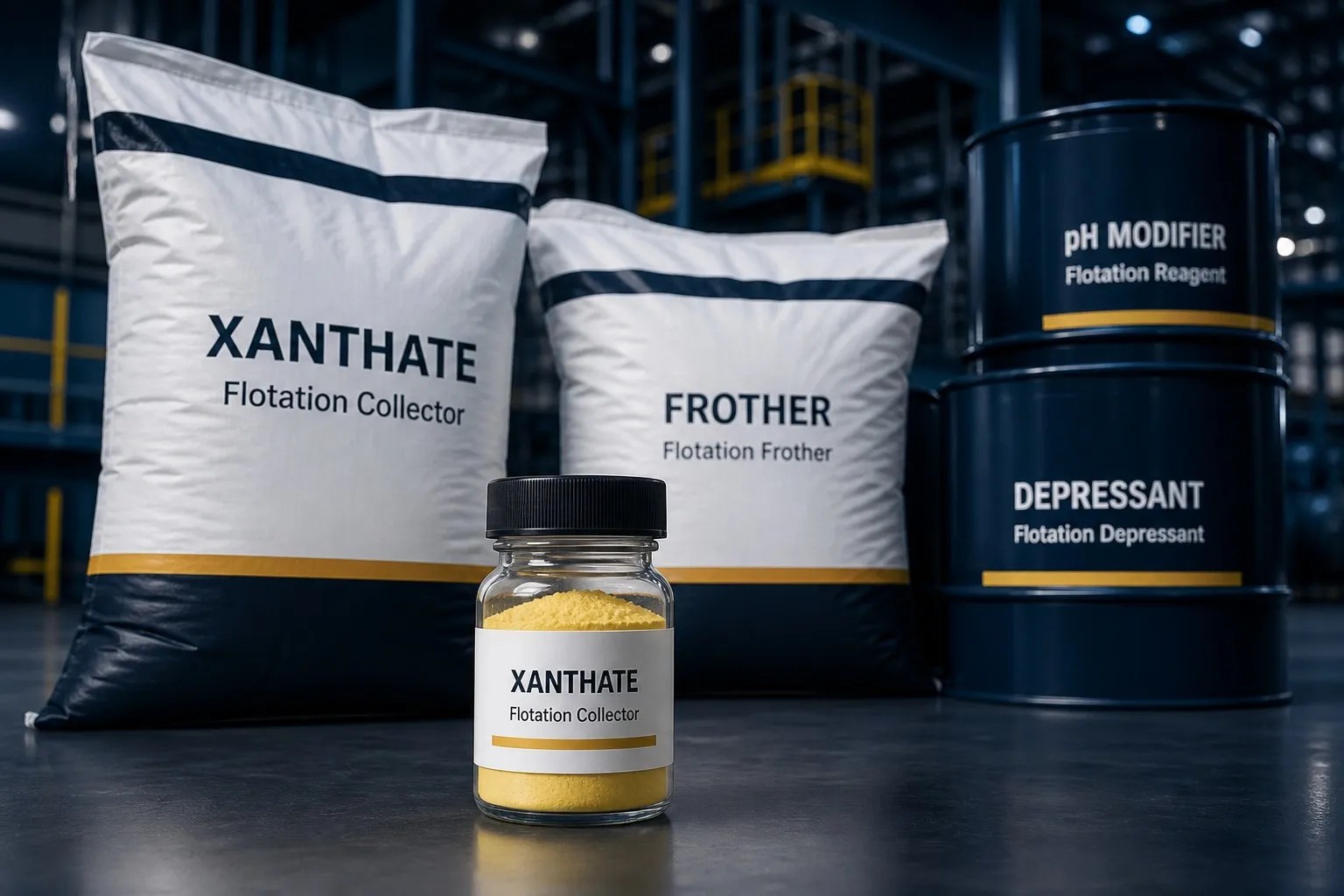
Flotation is a system, not a single reagent. A full-service flotation reagent manufacturer should cover the main functional classes:
- Collectors — xanthates such as sodium butyl xanthate (SBX), sodium isobutyl xanthate (SIBX), sodium isopropyl xanthate (SIPX), and potassium amyl xanthate (PAX); dithiophosphates (black reagents); and thionocarbamates such as Z-200 for selective copper and precious-metal flotation.
- Frothers — methyl isobutyl carbinol (MIBC), pine oil, and alcohol blends, which control bubble size and froth stability.
- Regulators — activators such as copper sulfate, and depressants such as sodium hydrosulfide, sodium sulfide, and zinc sulfate for complex ores.
The value of one-stop supply is real: a single manufacturer who can deliver all three classes lets the concentrator keep one quality standard, one COA format, and one supplier audit instead of several. It also simplifies emergency replenishment when a circuit change requires a different frother or collector at short notice.
Quality Systems and Batch Consistency
For flotation reagents, consistency is the product. A xanthate that drifts in effective content by a few percent changes reagent consumption, froth character, and ultimately recovery. When evaluating a flotation reagent manufacturer, ask for:
- Effective content specifications — for xanthates, the active component content and moisture limits, verified per batch.
- Certificate of analysis (COA) for every batch, with test methods stated.
- ISO 9001 quality management, and where relevant, environmental and occupational health certifications.
- Stability and shelf-life data, including storage conditions — xanthates decompose on exposure to moisture and heat, so packaging and storage advice matters.
The best manufacturers will also share historical batch data on request, letting you judge drift before it becomes a plant problem.
Custom Blends and Technical Support
Few concentrators run textbook chemistry. Most ores — a particular copper-zinc ore with pyrite, a gold ore with preg-robbing carbon — need adjusted collector blends, frother ratios, or depressant regimes. A manufacturer with in-house laboratories can run flotation tests on your ore sample and propose a reagent scheme before you commit to a purchase order. That capability is the strongest differentiator between commodity suppliers and true technical partners.
Look for: laboratory flotation test equipment, experience with your ore type, and the willingness to adjust blends or recommend alternative reagent families when standard products underperform. Some manufacturers also offer on-site support during trial runs, which dramatically shortens the learning curve.
Logistics, Packaging, and Compliance
Flotation reagents are classified as hazardous goods for transport — xanthates are flammable and moisture-sensitive, sodium sulfide and sodium hydrosulfide are hazardous solids. A competent flotation reagent manufacturer handles this professionally:
- Packaging suited to the product: waterproof laminated bags, drums, or IBC totes, with correct UN classification and labelling.
- Sea-freight documentation that is correct the first time, including dangerous-goods declarations and the required shipping marks.
- Reasonable MOQs and lead times, with buffer stock advice so a missed vessel does not stop the concentrator.
The compliance burden should sit with the manufacturer, not the buyer: if a supplier cannot produce correct hazardous-goods paperwork, that is a red flag regardless of price.
Cost, Contracts, and the Long View
Price per tonne matters, but the true cost of flotation reagents is recovery per dollar, not dollars per tonne. A slightly more expensive reagent that delivers half a percent more recovery pays for itself many times over in a large concentrator. Structure contracts to reward performance: annual supply agreements with agreed specifications, quality penalties, and joint review of plant results. The strongest relationships are those where the flotation reagent manufacturer is measured on the same KPI as the plant — recovery and concentrate grade.
A Practical Evaluation Checklist
Before signing with any flotation reagent manufacturer, run a short audit: verify the factory exists and inspect production and storage facilities, request three consecutive batch COAs and check the drift, ask for a flotation test on your own ore sample, confirm UN-classification and dangerous-goods documentation for sea freight, and speak with one or two existing customers in your region or ore type. If a supplier hesitates on any of these five points, treat it as a risk signal. The audit takes days, but it protects a reagent budget that runs continuously for years.
Conclusion
The right flotation reagent manufacturer brings three things: a complete product portfolio, rigorous quality systems, and the technical capability to customise chemistry to your ore. Starting with the functional classes — collectors, frothers, regulators — and verifying batch consistency, COA discipline, and hazardous-goods competence will separate genuine manufacturers from mere traders. For more on the manufacturer-versus-trader decision and the sourcing checklist, see our guide on choosing a mining chemicals supplier and the sodium butyl xanthate manufacturer and supplier guide.